
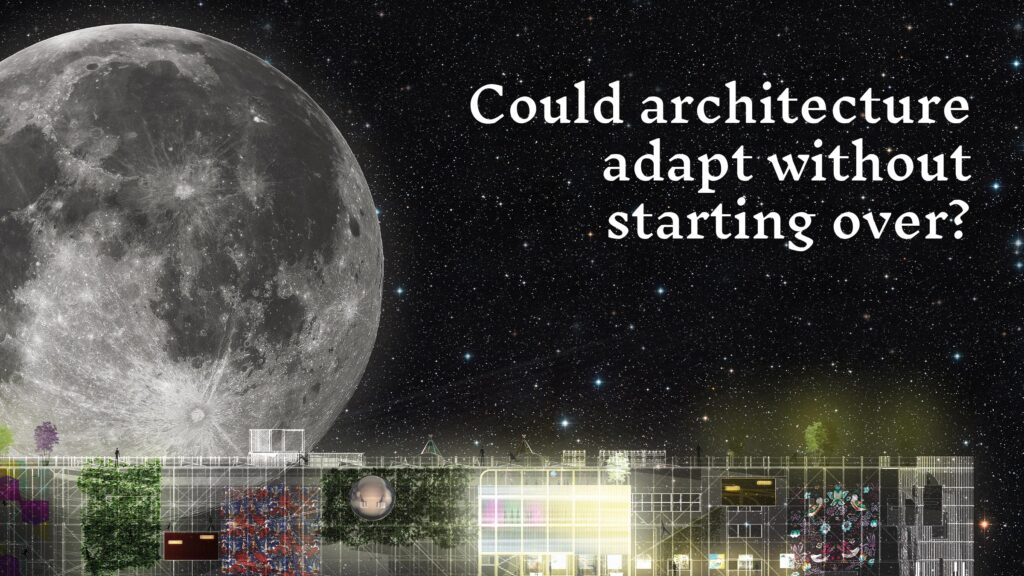
Limits of traditional architecture
Factories, like many industrial spaces, are built for function and permanence. But permanence can become rigidity. As needs shift — operational, cultural, creative — fixed spaces begin to resist change. Traditional architecture, focused on efficiency and control, often struggles to support the complexity of how we work and live today. When production must exist alongside creativity, and logistics alongside culture, the architecture can start to hold things back.
Impact on people
This lack of flexibility affects how people use and experience space. Workers and visitors are confined to environments that limit interaction and creativity. There is little room for experimentation, shared use, or cultural activity. Architecture becomes a constraint rather than a support, forcing people to work around the space instead of being empowered by it.
The case of Stamperia Olonia
Stamperia Olonia, a historic textile printing factory in the Olonia Valley, is a key production site for Liberty and part of Italy’s long-standing cotton industry. This project reimagines the site not as a static facility, but as a layered, evolving space that reflects the energy of ongoing production and creative exchange. Our intention was to introduce a new kind of architecture—one that overlays, rather than replaces—allowing the factory to become a flexible, open framework for work, gathering, and transformation.

What if,
A place becomes a gathering point for a community
A free port where everything is possible
An ephemeral world which changes every time
A unique chance to live an experience
A campfire where we keep going to
A landmark for art performances
A school in the field
And an open-air cinema
All light on the ground
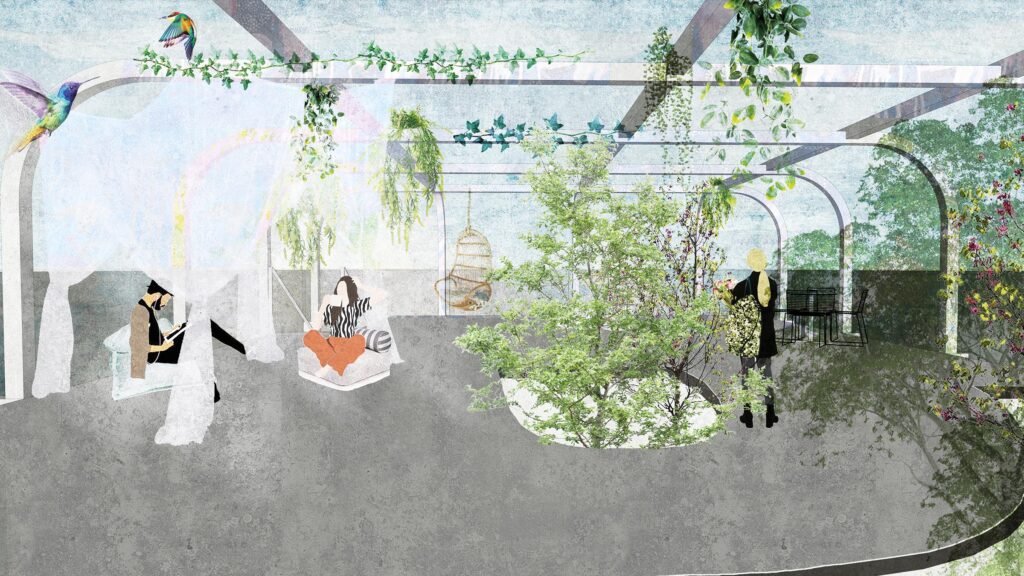
What if,
We moved away from traditional architectural approaches that create static environments with limited possibilities? These are spaces that resist change and are difficult to expand or adapt over time. By turning instead to temporary architecture, festival culture, and the open conditions of the periphery, where there is little regulation and where being light on the ground is possible, new ways of being together begin to emerge. In these flexible and shifting contexts, unexpected possibilities appear for connection, creativity, and the reimagining of space as something responsive to life as it unfolds.

What if,
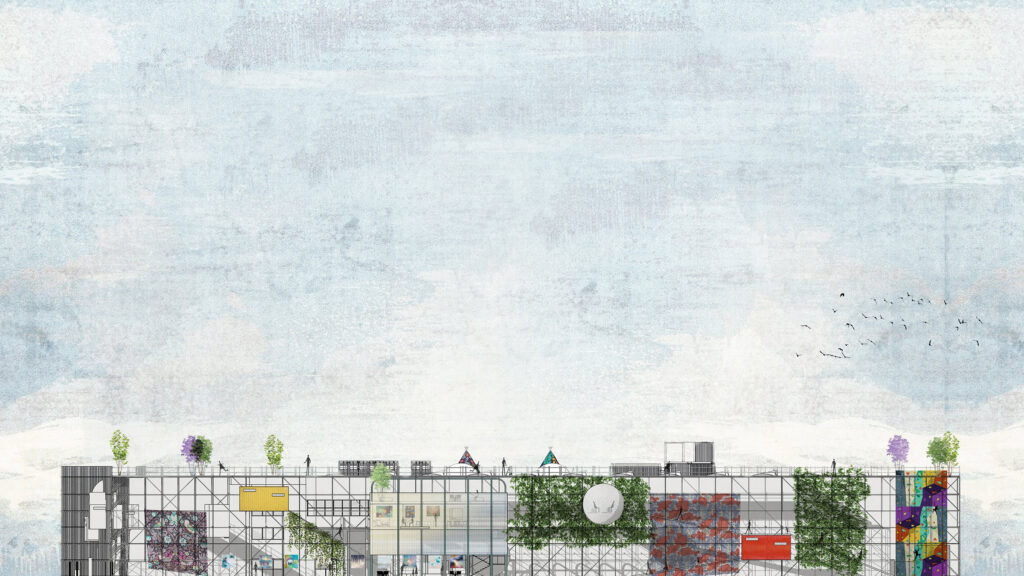
Structures, dwellings, and spaces were added into and around the existing factory using a large scaffolding that surrounds the site like a stage? A framework for hanging large canvases, growing plants, presenting art, or simply passing through. Campfires on the roof, mobile marketplaces arriving, fashion and art events, concerts, and gatherings of knowledge forming a temporary village. Built within days, then taken down or reshaped and moved elsewhere. Inside, light constructions made from tents and membranes could create shifting spaces, like theatre sets in constant transformation, where anything can happen.
This is Overlay Architecture. It offers a way to remain flexible, to centre people, their interactions, their needs, and their dreams. It opens possibilities that traditional architecture often cannot provide, offering a more sustainable, affordable, and responsive way to create space.


The design unfolds through a series of strategic additions that support the factory’s daily life while opening it to new possibilities. A new entrance reorganises the flow of people, making movement through the site more intuitive for both staff and visitors.


A separate structure sits in front of the building, offering a renewed identity without altering the original facade. Inside, flexible workspaces, quiet rooms, and adaptable furniture create space for focus, collaboration, and change. The atelier becomes a place of touch and testing, connected to both the rhythm of production and a digital archive that can be explored through interactive tools
A small cafeteria near the entrance provides a space to pause, to meet, and to share. Nothing is fixed. Each layer is designed to grow, shift, or be removed, creating a framework that responds to its users rather than defining them.

Contact
Every design starts with a question. We’re ready for yours. Let’s explore, push boundaries and bring people together. We’d love to hear your thoughts, so send us a message.